
Good training sessions do not happen by accident. They follow a structure: a theme, a progression, and a purpose. The coaches who turn up with a vague idea of what they want to do end up wasting twenty minutes reorganising players between drills. The coaches who plan in advance can spend that time actually coaching.
Here is a framework for planning sessions that works from grassroots to academy level.
Start With a Theme
 A clear session theme keeps every drill connected to the same lesson.
Every session should have a single tactical or technical theme. Not "defending and attacking." One thing.
Examples:
- Pressing triggers and compactness
- Third-man combinations in central areas
- Switching the play quickly after winning the ball
- 1v1 defending: delay and deny
The theme is the thread that runs through every exercise. Each drill should teach the same lesson from a different angle. If a drill does not serve the theme, cut it.
Session Structure: Four Phases
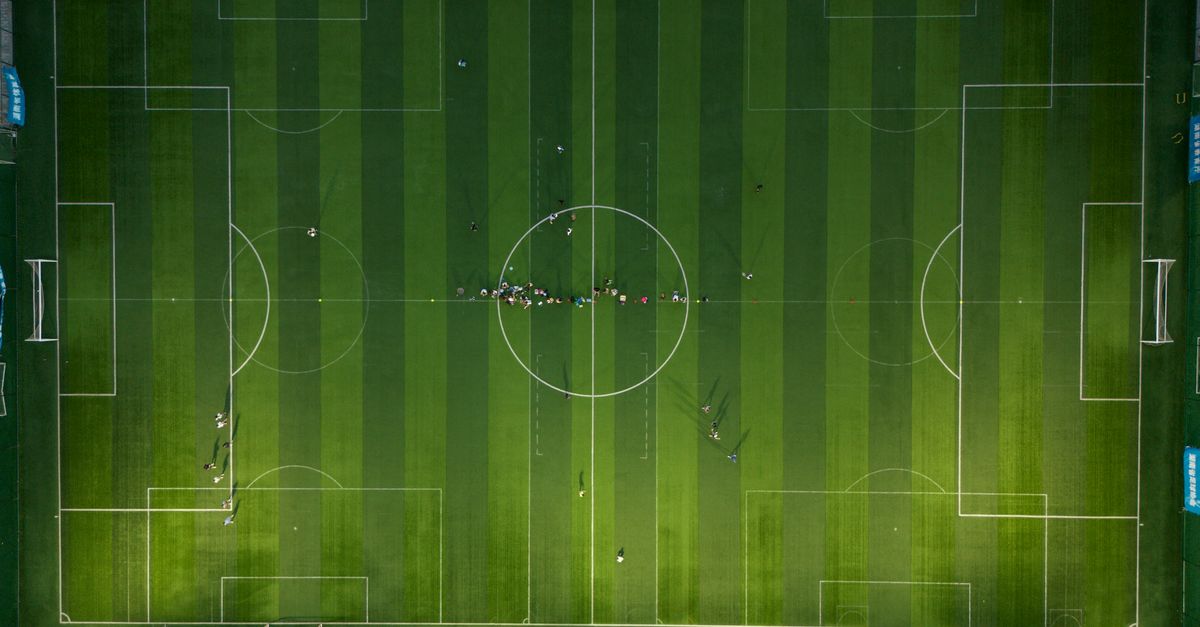 Mapping out pitch zones before you arrive helps allocate time per phase.
1. Activation (10–15 minutes)
Get players physically and mentally warm. This is not just jogging in circles. Use a rondo, a passing pattern, or a small possession game that loosely relates to the session theme. Players arrive switched on, not half-awake.
2. Technical Practice (15–20 minutes)
Isolate the skill or movement you want to develop. Low opposition pressure, high repetition. If the theme is switching play, this might be a simple pattern, left back to centre back to right back to right winger, with players focusing on the quality of their opening touch and pass weight.
3. Tactical Exercise (20–25 minutes)
Apply the skill in a more realistic context. Add opponents, add decision-making. A game-like exercise with conditions that force the theme to emerge. For switching play, this might be a 7v7 with bonus points for goals scored from switches.
4. Match / Game (15–20 minutes)
Free play with minimal intervention. Let players express what they have learned. Observe. The session has been the teaching, the match is the exam.
Timing
Write down how long each phase lasts before you arrive at the pitch. Include transition time: moving cones, changing bibs, explaining rules. A drill that takes five minutes to set up is a drill that needs to be simpler.
A 90-minute session might look like:
| Phase | Duration | |---|---| | Arrival / bib up | 5 min | | Activation rondo | 12 min | | Technical drill | 18 min | | Transition | 3 min | | Tactical exercise | 22 min | | Transition | 3 min | | Match | 20 min | | Cool down / debrief | 7 min |
Coaching Notes
Write two or three key phrases you want to say during each drill. Not a script, prompts. The heat of the moment makes it easy to forget the specific cue that makes a drill click. Having it written down means you say the right thing at the right time.
Using Clubroom to Plan Sessions
Clubroom's session planner lets you build each drill on the pitch canvas, set durations, and write coaching notes all in one place. When you arrive at the pitch, you have everything on your phone, no paper, no forgetting what order things were in.
You can also share the session plan with your assistant coaches before training so everyone arrives knowing their role.