A formation number tells you where players start. It does not tell you how they press, how they transition, or how they move in and out of shape. Two teams playing 4-3-3 can look nothing alike.
This guide covers what the most common formations actually require, not the theory, but the practical demands on your players and your coaching.
4-3-3
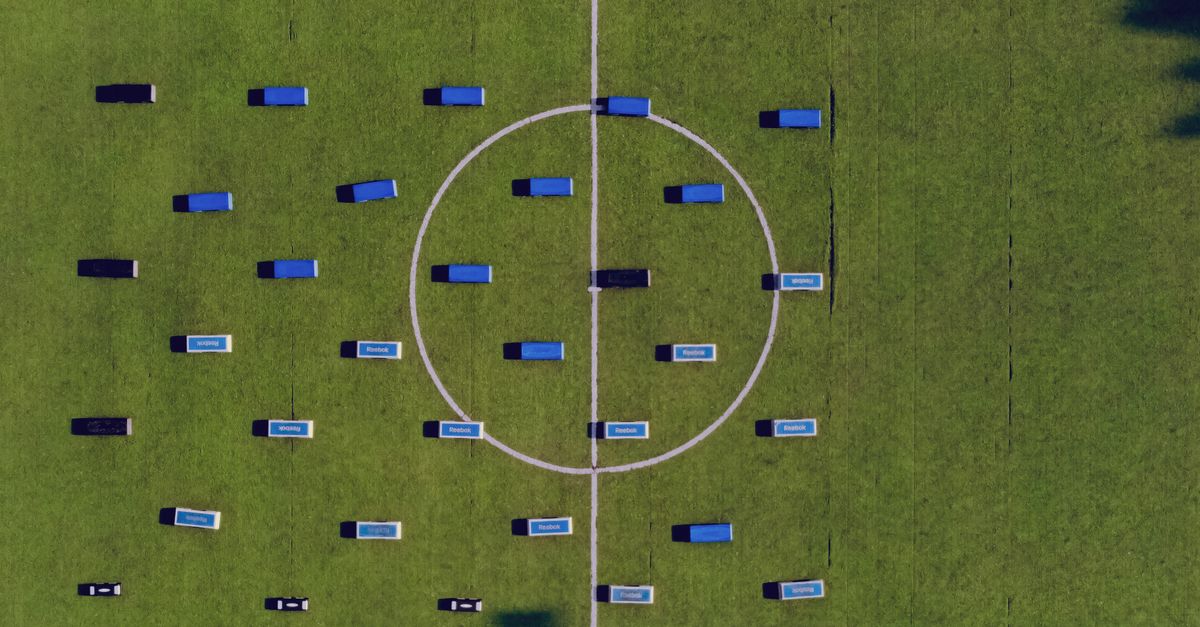 Formation choice shapes how your team occupies width, depth, and transition shape.
The 4-3-3 is the most recognisable system in modern football. Three forwards, three midfielders, four defenders.
What it demands:
- Wide forwards who press. The 4-3-3 press starts with the two wide forwards cutting off the full-backs. Forwards who cannot press make the system easy to play through.
- A compact midfield triangle. The three midfielders need to move together: when one presses, the other two adjust. A flat midfield three that does not rotate creates large gaps.
- High full-backs. When wide forwards press forward, full-backs must push up to maintain width.
Best suited for: Squads with athletic, hard-working wide forwards and technically capable full-backs.
4-4-2
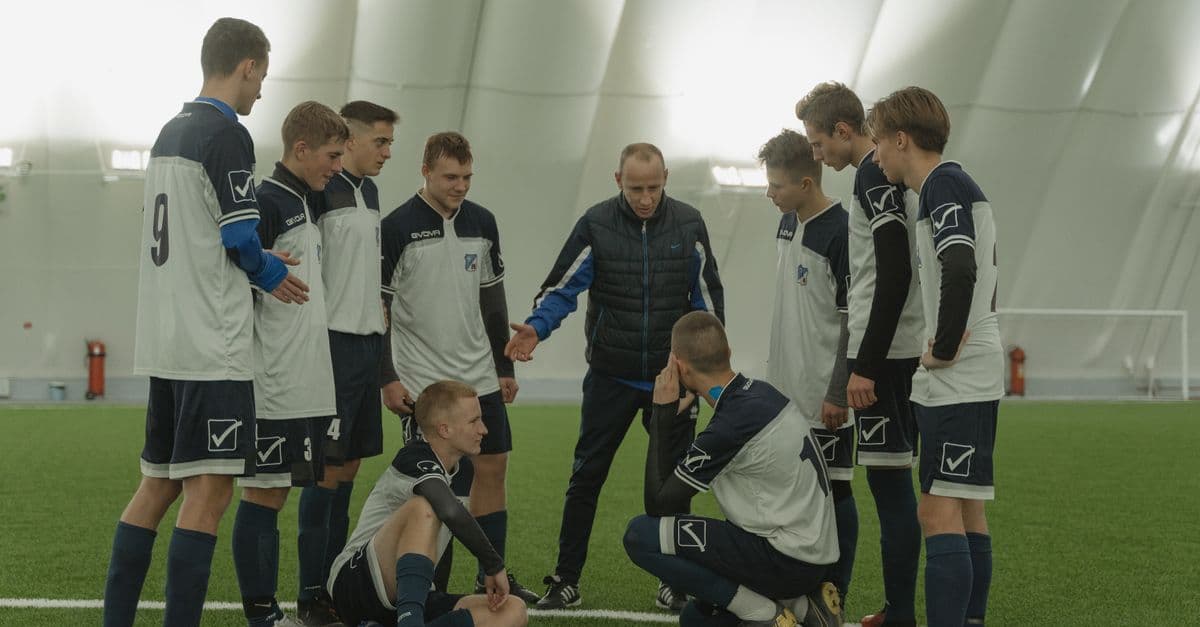
 A quick team talk before the first drill connects the diagram to real movement.
The 4-4-2 is the most natural system for most players raised on English or Scandinavian football.
What it demands:
- Two strikers who complement each other. One holds, one runs. A flat 4-4-2 with two holding strikers is easy to defend against.
- Wide midfielders who track back. In a flat 4-4-2, wide midfielders cover the full-back position when the full-back pushes forward.
- Compact defensive shape. The strength of the 4-4-2 is that it is hard to play through when compact.
Best suited for: Teams with two reliable strikers and midfielders comfortable in 2v2 defensive situations.
4-2-3-1
The 4-2-3-1 prioritises midfield security over attacking numbers.
What it demands:
- A double pivot with correct spacing. The two defensive midfielders must stay far enough apart that one pass cannot bypass them both.
- A number ten with stamina. The attacking midfielder covers enormous ground: supporting the striker, connecting to wingers, pressing the opponent's pivot.
- A lone striker who holds. Must receive with their back to goal and bring others into play.
Best suited for: Teams wanting defensive solidity without sacrificing attacking flexibility.
3-5-2
Three central defenders, two wing-backs, a three-man midfield, two strikers.
What it demands:
- Wing-backs with the engine of full-backs and the output of wingers. They provide primary width in and out of possession.
- Three centre-backs comfortable with the ball. One almost always has time and space; a centre-back who panics under pressure makes the formation fragile.
Best suited for: Teams with two reliable wing-backs and a dominant ball-playing centre-back.
Choosing the Right Formation
The right formation is the one your players can execute. Questions to answer:
- Do I have wide players who press, or wide players who create? (4-3-3 vs 4-4-2)
- Do I have one reliable striker or two? (4-2-3-1 vs 4-4-2)
- Can my full-backs get forward, or do I need them to defend? (3-5-2 vs 4-back)
- What does my squad's fitness support? (High press demands more aerobic capacity)
Once you choose, build training drills around the specific demands of that formation. A 4-3-3 team needs midfield rotation drills. A 3-5-2 team needs wing-back crossing and recovery work.
Visualising Your Formation
Draw your formation on a pitch canvas before the season. Place the players, show the pressing shape, map the transitions. When everyone sees the same picture, tactical discussions become faster and more specific.