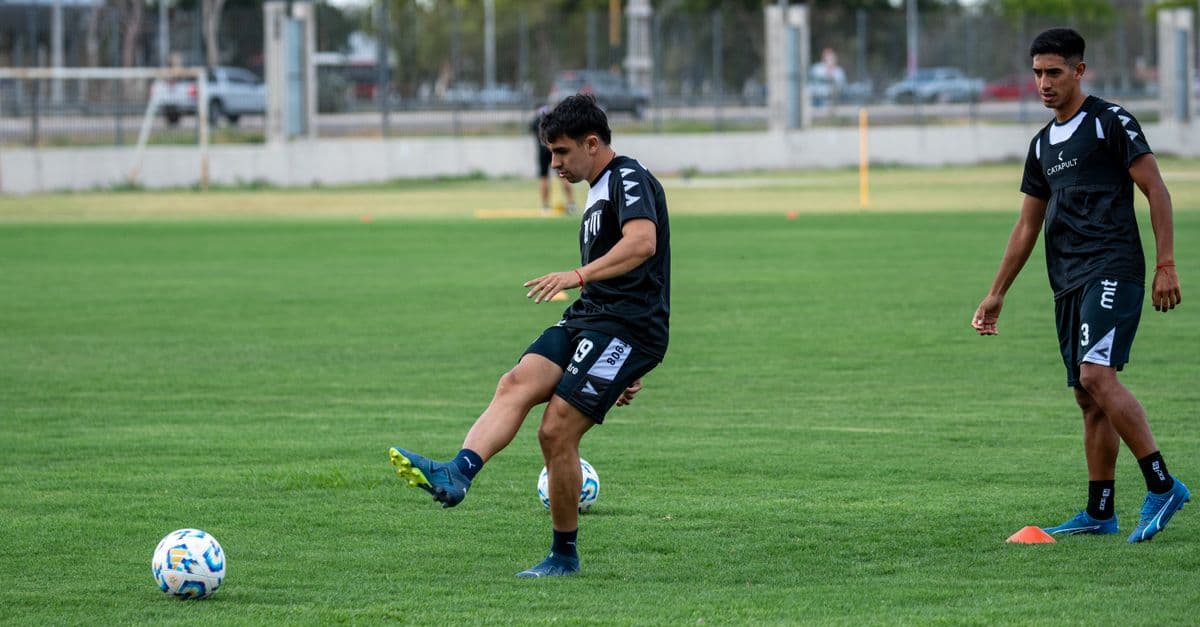
Playing out from the back has become the default expectation at every level of the modern game. Even grassroots teams are asked to do it. The problem is that most coaches tell their defenders to play out without giving them the drills that develop the skills to do it.
Build-up play requires specific positioning habits, passing angles, and decision triggers. You do not develop these by repeating 11v11 and hoping defenders figure it out. You develop them with isolated, purposeful drills.
The Core Skills of Build-Up Play
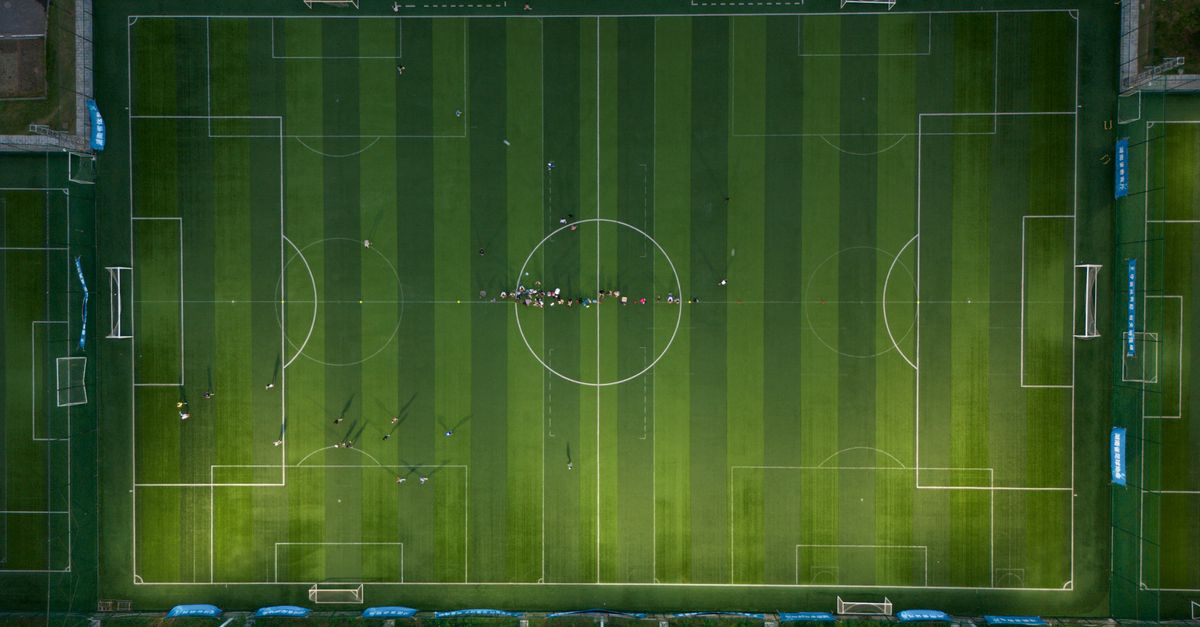 Positional structure from the back is the starting point for every build-up drill.
Before selecting drills, identify what you are actually training:
Positioning under no pressure. Can your goalkeeper and centre-backs find positions that create passing angles before the press arrives?
Quick ball circulation. Can your defensive line move the ball from one side to the other before the opponent's press reorganises?
Third-man principles. When a defender plays to a midfielder who is under pressure, can the midfielder lay off to a third player who has found space?
Switching the play. Can your team exploit the space on the far side after drawing the press to one side?
Drill 1: The Goalkeeper + Back Four Positional Pattern
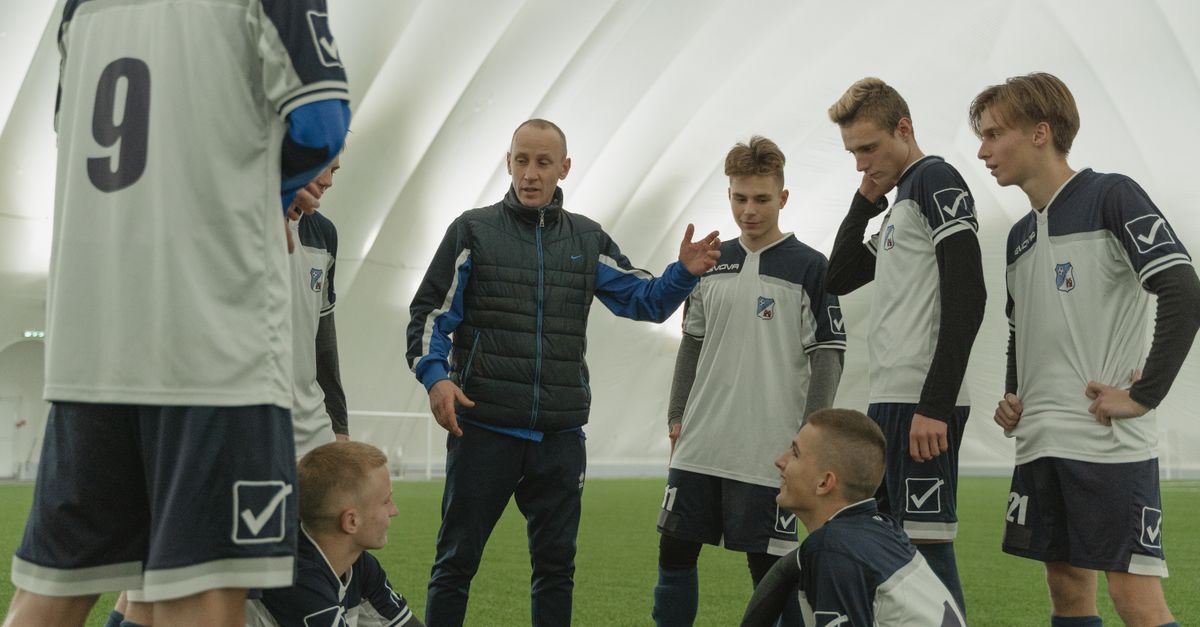 Coaches cue the trigger moment that initiates the switch of play.
Setup: Full pitch, your defensive half. Goalkeeper, two centre-backs, two full-backs. No opponents.
Pattern: Goalkeeper plays to right centre-back. Right centre-back to right full-back. Right full-back back to right centre-back. Right centre-back switches to left centre-back. Left centre-back to left full-back. Repeat in reverse.
Focus: Movement before the pass arrives. The player receiving should have their body open before the ball reaches them. Run it slowly until the movement is automatic.
Drill 2: The 3v2 Press Resistance Exercise
Setup: One third of the pitch. Three defenders (two centre-backs and a defensive midfielder) versus two forwards pressing.
Task: Defenders must play through or around the press and reach a target zone 30 metres forward.
Conditions: Defenders score a point for reaching the target zone. Forwards score for winning the ball or forcing a long clearance.
Why it works: The 3v2 forces defenders to use numerical superiority intelligently. The solution is always available; the pressure is recognising it quickly.
Drill 3: The Switch Under Pressure Pattern
Setup: Full pitch, both halves active. Build-up team of five versus a pressing team of four.
Condition: The build-up team scores only if they switch play from one side to the other before reaching the target zone. Direct play through the centre does not count.
Why it works: Forcing the switch as a scoring condition means players practise it even when it is not the easiest option.
Drill 4: The Third-Man Combination
Setup: 30×30 area. Centre-back, defensive midfielder, and a second midfielder. Two passive defenders.
Pattern: Centre-back plays to defensive midfielder under pressure. Defensive midfielder plays a one-touch lay-off to the second midfielder. Second midfielder has time and space.
Focus: The second midfielder must make their run before the first pass. Third-man combinations fail because the third man moves too late.
Sequencing Into a Session
A build-up play session works best in this order:
- Positional pattern (Drill 1): no opposition, establish the shape.
- Press resistance (Drill 2): add pressure to the early phase.
- Switch condition game (Drill 3): connect build-up to the transition.
- Small-sided game with build-up condition: free play with the coaching point as the scoring incentive.