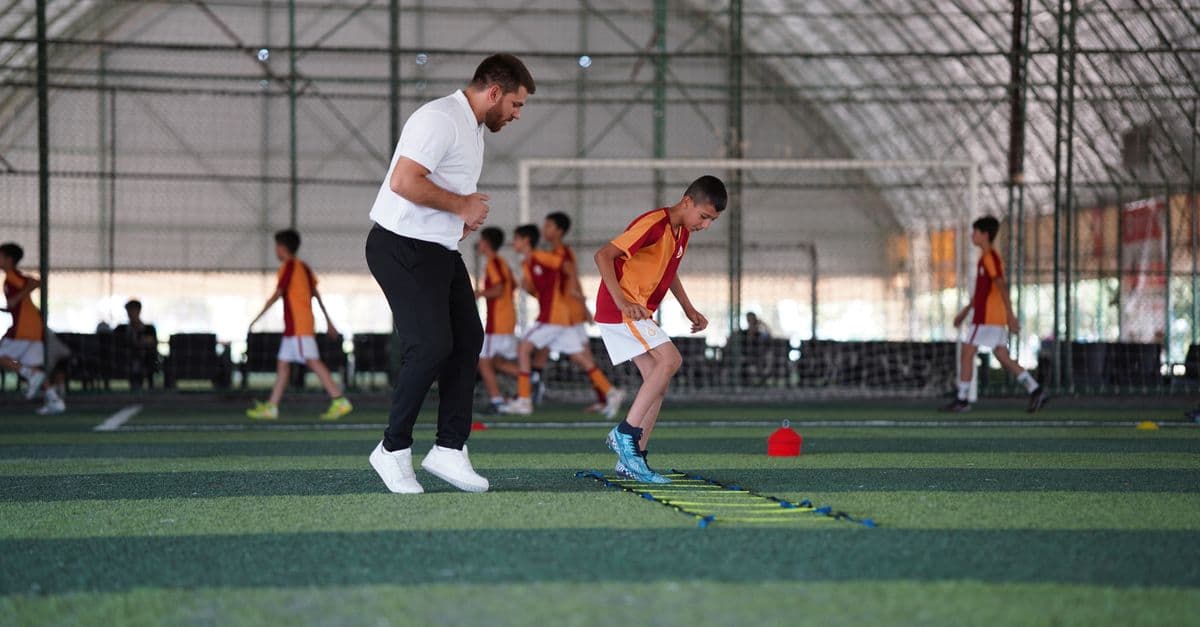
Coaching U10s is a different job to coaching adults. The brain at eight to ten years old is not ready for complex tactical instructions. What it is ready for is learning to love the ball: to feel comfortable with it at their feet, to find joy in a dribble that beats an opponent, to experience the satisfaction of a pass that arrives exactly where they wanted it.
These five drills are built around that idea. They are competitive, fun, high-repetition, and do not require long explanations.
1. Dribble Gates
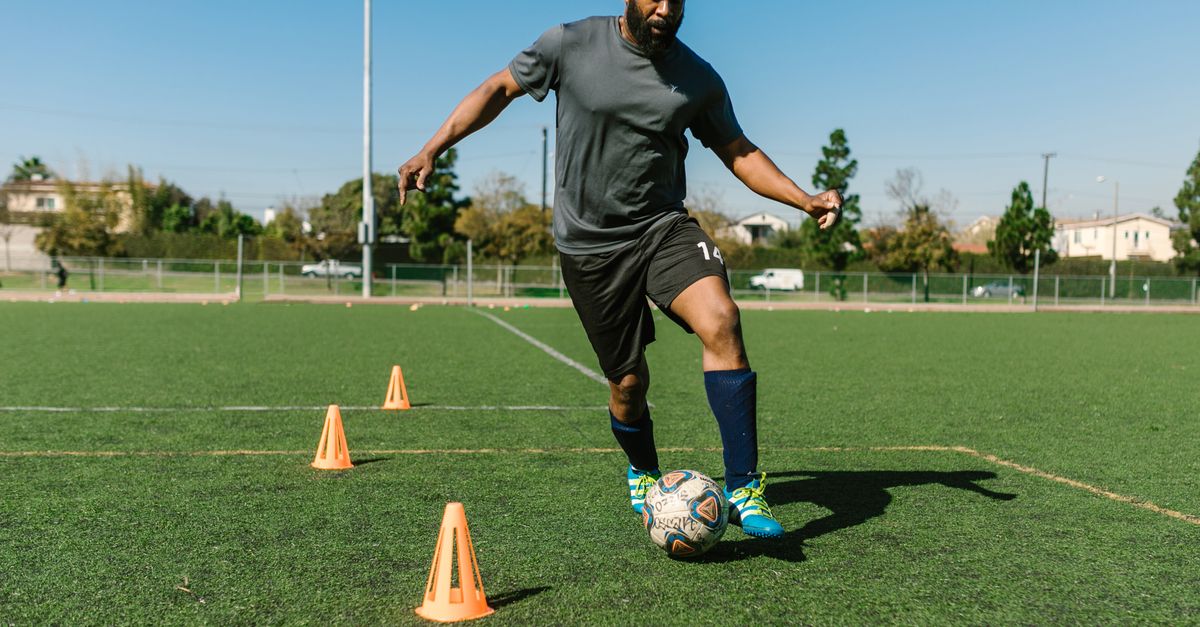 Dribble gates reward ball control and change of direction in a self-managed format.
Setup: Scatter eight to ten small gates (two cones 1 metre apart) across a 20×20 metre area. Each player has a ball.
How it works: Players dribble around the area and try to pass through as many gates as possible in 60 seconds. They cannot use the same gate twice in a row.
Why it works: High ball contacts, constant direction changes, and a simple competitive goal (beat your own score). No queuing, no waiting.
Coaching cue: "Keep the ball close, and take small touches so you can change direction quickly."
2. 1v1 Knockout
 The passing square builds the habit of moving after the ball.
Setup: A 6×8 metre grid with a small goal at each end. Pairs play 1v1 for 60 seconds, then rotate opponents.
How it works: Standard 1v1: score in the opponent's goal, defend yours.
Why it works: The 1v1 is the most fundamental contest in football. U10s love it because there is nowhere to hide and the outcome is immediate. A player who wins five 1v1s in twenty minutes has had twenty decisions to make about how to beat an opponent.
Coaching cue: "Change speed: go slow, then go fast. That's how you beat defenders."
3. Passing Square
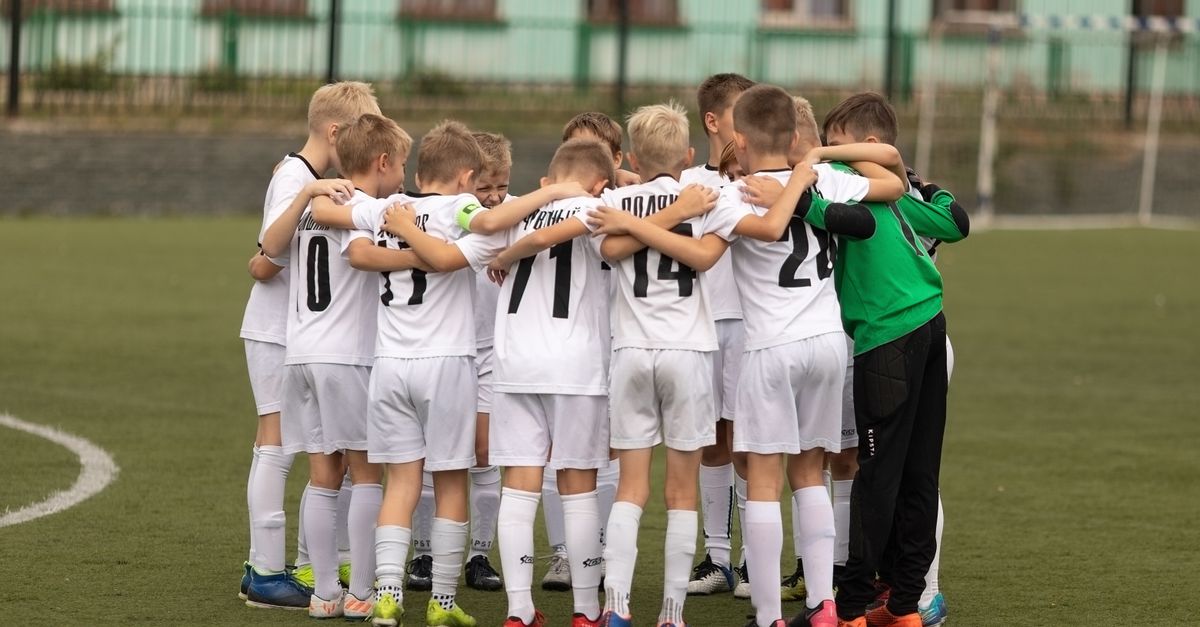 Short team talks keep young players focused between drills.
Setup: Four cones in a 5×5 metre square. Two players per square, one ball.
How it works: Player A passes to player B, who controls and passes back. After 10 passes, add a condition: B must control with their weaker foot before playing back.
Why it works: Short, repetitive passing with a clear focus on first touch. The weaker foot condition keeps it challenging without adding confusion.
Coaching cue: "Cushion the ball: let it come to you, don't stab at it."
4. Sharks and Minnows
Setup: A 25×20 metre area. Two or three players are sharks (no ball). Everyone else is a minnow with a ball.
How it works: Sharks try to kick minnows' balls out of the area. If a minnow loses their ball, they become a shark. Last minnow with their ball wins.
Why it works: Pure fun with real pressure. Minnows must protect the ball while moving in a crowded space. Develops shielding, awareness, and quick direction changes, all without the players knowing they are practising technique.
5. 4v4 Small-Sided Game
Setup: A 30×20 metre pitch, small goals, no goalkeeper.
How it works: Free play, 4v4. Coach observes.
Why it works: After focused drills, players need to express what they have been practising. Small-sided games maximise touches and decisions. No goalkeeper means more shots, more goals, more fun.
Coaching approach: Minimal intervention. Let them play. Step in with one specific observation, such as "Good, you changed speed before the shot," not a lecture.
The Rule for U10 Coaching
If an explanation takes more than a minute, the drill is too complicated. If players are standing in a queue for more than 30 seconds, restructure it. U10s learn by doing, not by listening.
Use Clubroom to diagram these drills before training and share them with any parent helpers or assistant coaches. A clear visual setup diagram means less time explaining and more time playing.