jonkir_7
Untitled Drill 2
1v1
Untitled Drill
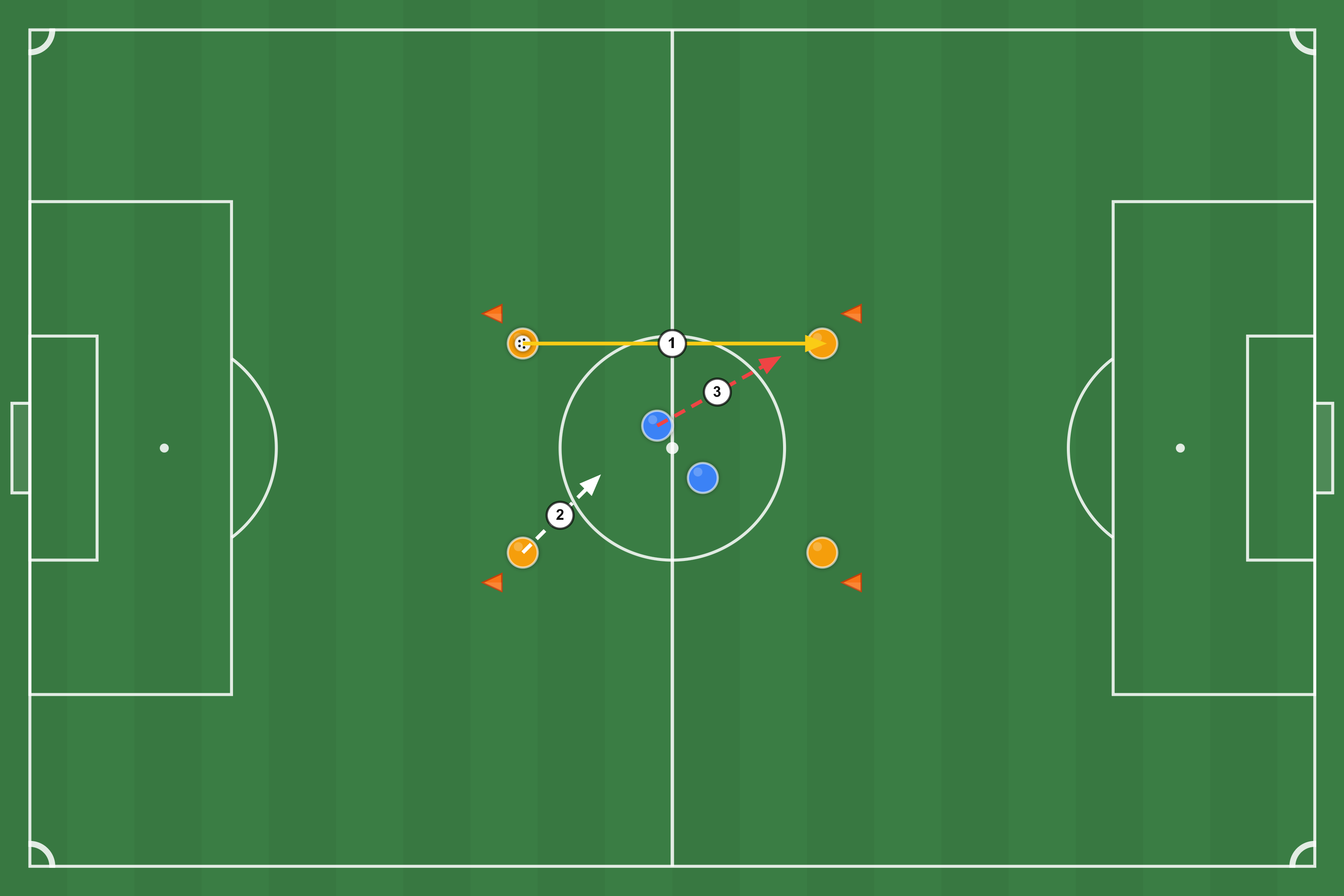
Tactical: 3v3 + 2 Neutrals — Play Through the Line
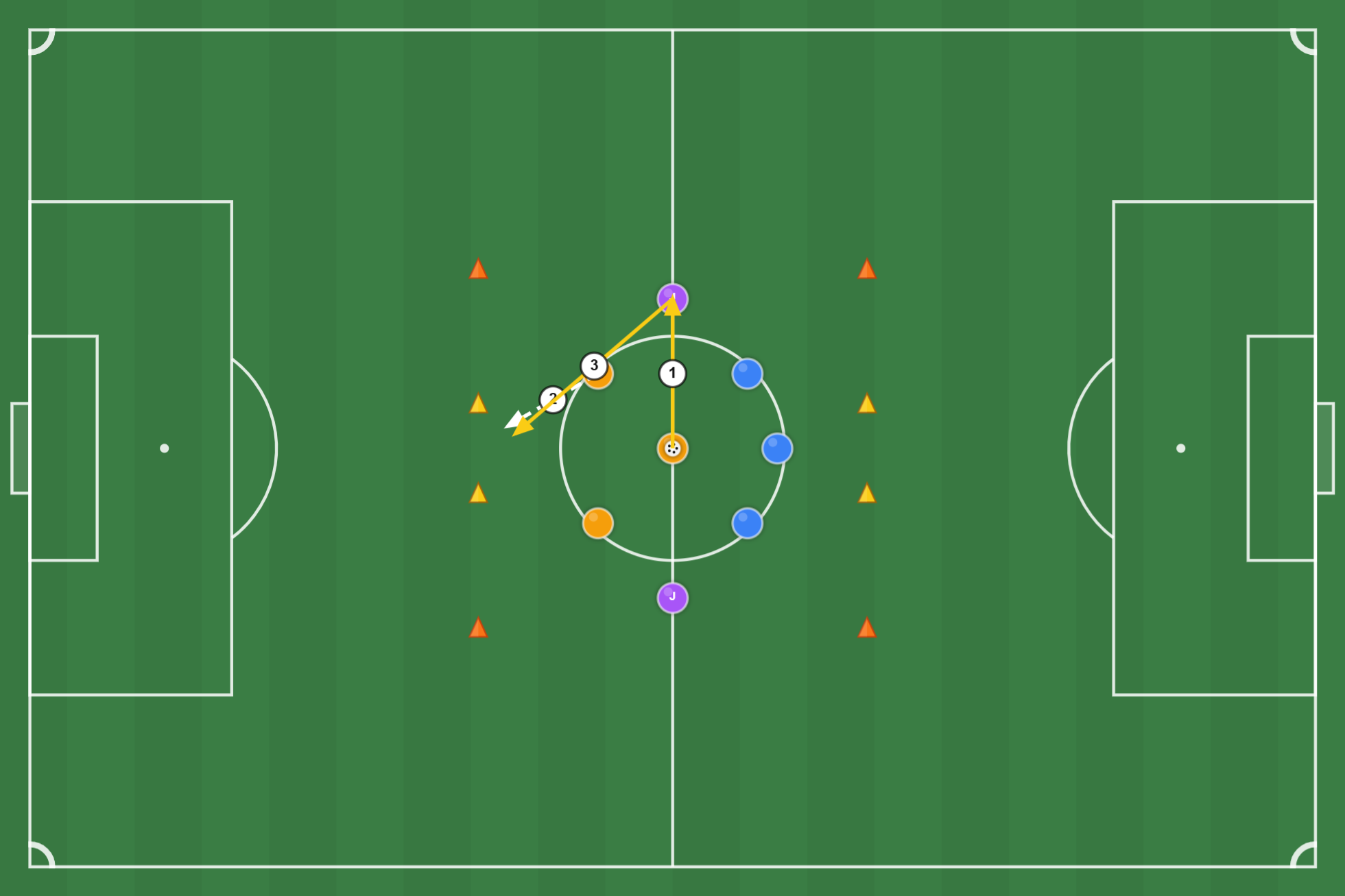
Two teams of three play in a central zone with two neutral floaters who always join the team in possession, creating a 5v3 overload to keep the ball and progress toward two target gates. This trains decision-making under realistic pressure and the transition moment the instant possession changes, directly bridging the rondo into full games. The area is a 25x20m rectangle with four corner cones and two 3m target gates at each end; a point is scored by passing through the opposition's gate. The coach observes how quickly players react at the turnover — both to counter-press and to attack the free gate.
Technical: 4v2 Rondo — Support & Escape
Two groups play a 4v2 rondo in a marked square, four attackers keeping possession against two defenders who press as a pair. This isolates the core small-sided skill of finding the free player and supporting on angles, the exact behaviour the games later demand. The area is a 12x12m square with four boundary cones; the two defenders switch with the pair that loses the ball or after they win it twice. The coach watches for attackers adjusting their support angle so a passing lane always exists.
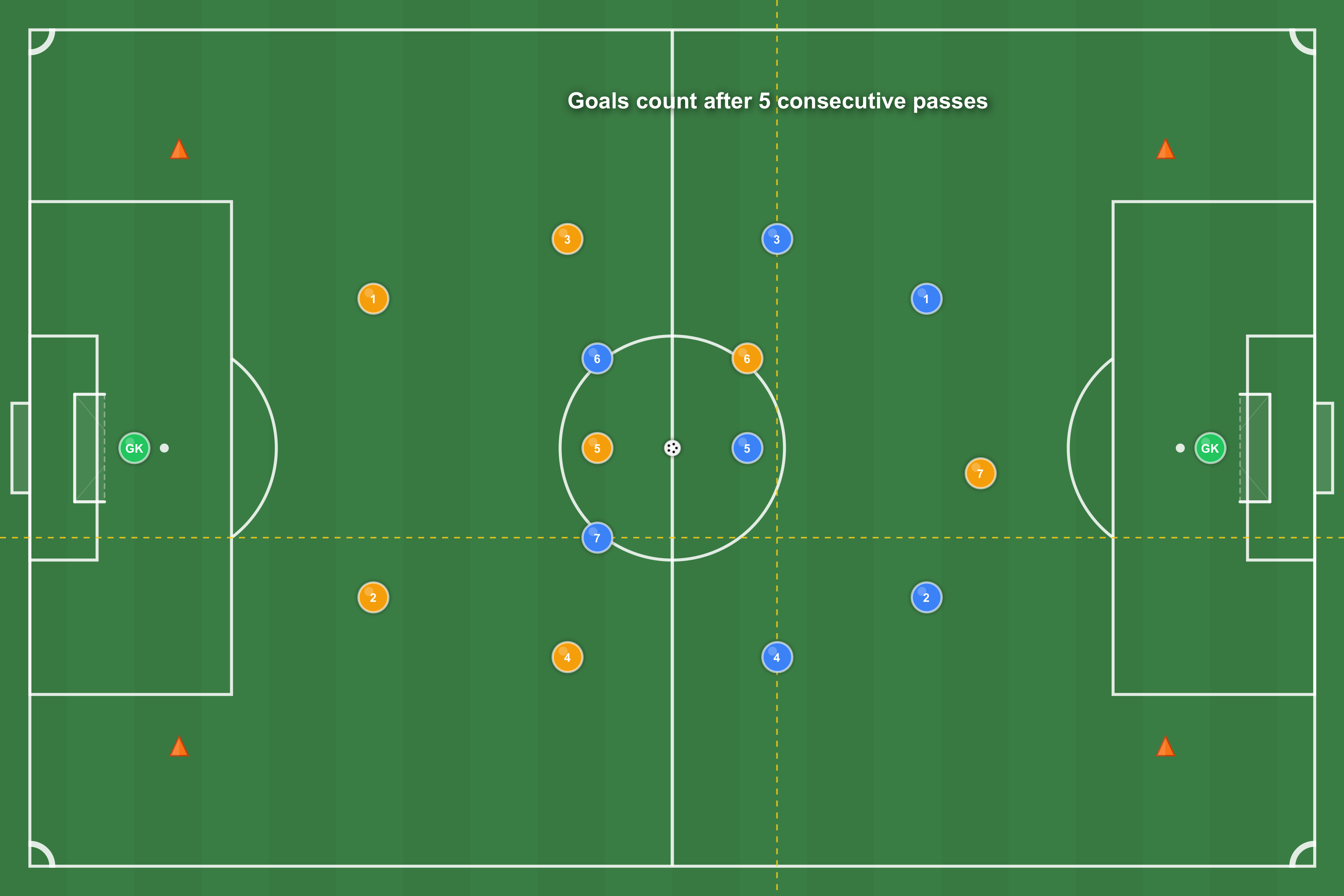
Game: 7v7 + GK — SSG with Passing Constraint
The full group plays a 7v7 + goalkeepers small-sided game on a half-pitch with two standard goals, reinforcing everything trained through the session in a match-realistic environment. The constraint — goals only count after the team has strung together at least five consecutive passes — rewards the possession, support angles, and quick transition the earlier drills built. The area is a 50x40m pitch with four corner cones; kick-ins replace throw-ins to keep the ball rolling. The coach observes whether players carry the rondo and gate-game habits into the game: scanning, supporting angles, and immediate counter-pressing on loss.

Feeder 1v1 to Goal
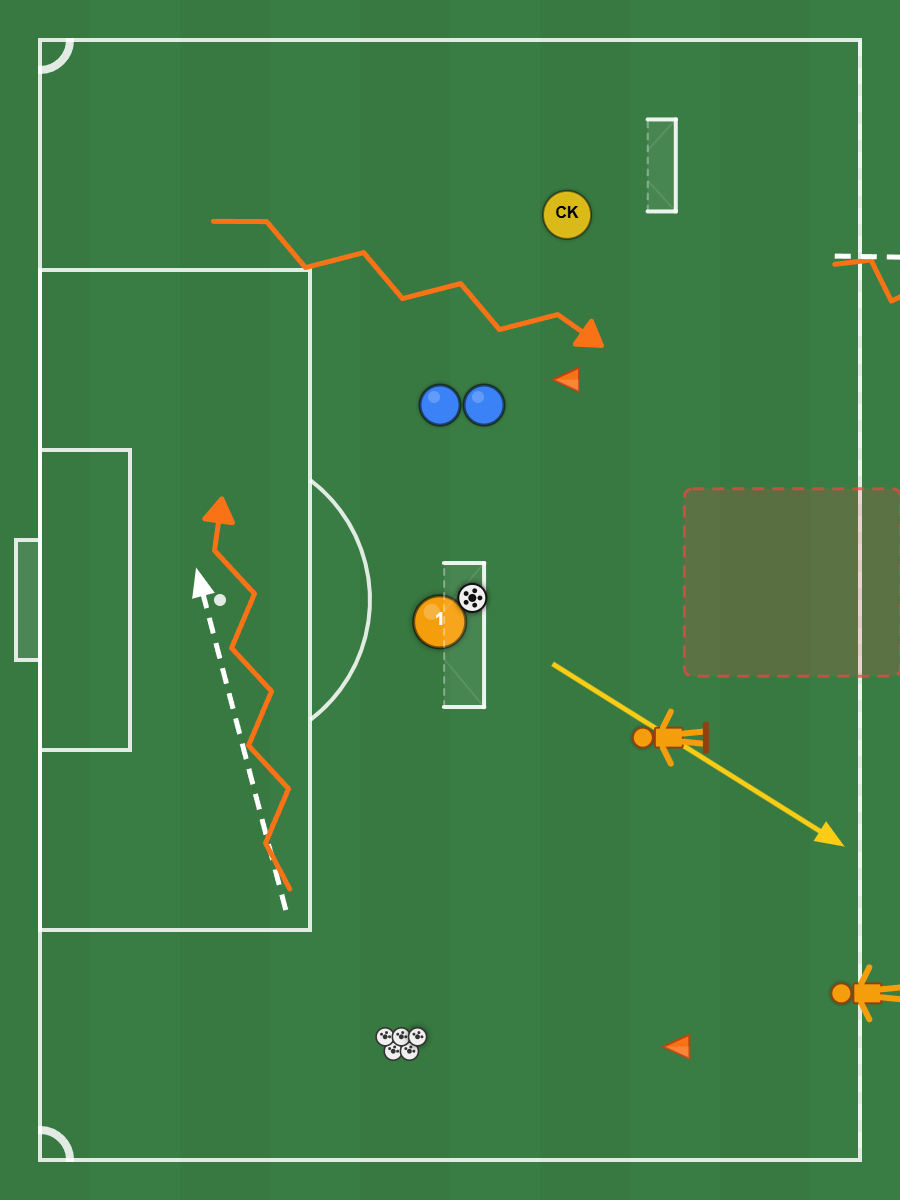
In a 14m wide channel, a coach feeds a ball to the attacker who must beat a defender and finish on the small goal. The defender reacts to the attacker's first touch, while the attacker is encouraged to accelerate past on receiving. This isolates the core 1v1 attacking and defending skill that the whole session is built around, repeating it with quick rotation so no one queues long. The coach watches the quality of the first touch (away from the defender) and the defender's approach angle.
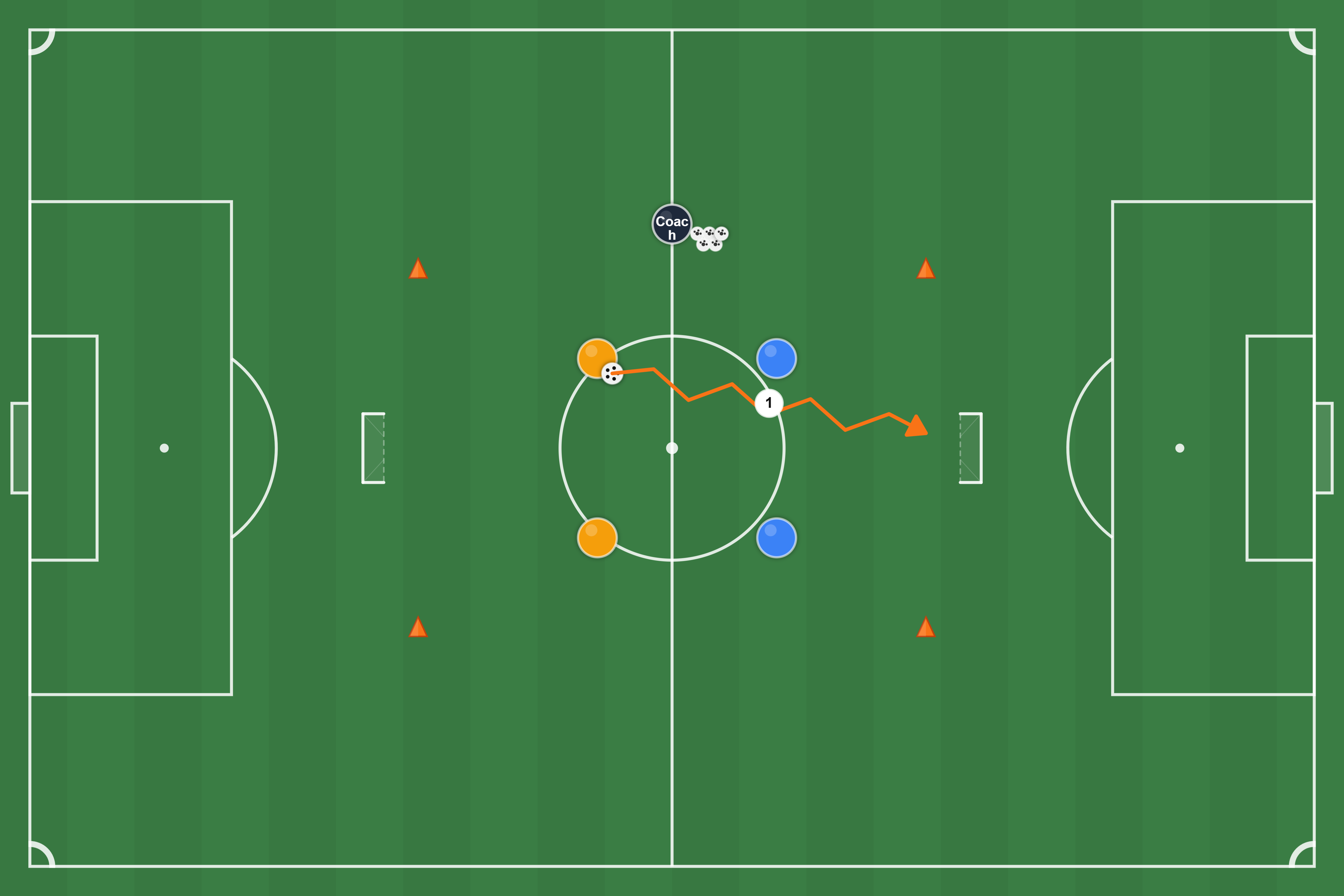
2v2 Transition Game
Two teams of two play in a 25x20m grid with a small goal at each end; the team that wins the ball immediately attacks the opposite goal while the other team must recover. This builds directly on the 1v1 work by adding a partner and constant transition moments, so players learn when to take their man on and when to combine. Teams rotate every 90 seconds with fresh pairs from the waiting groups kept tiny so rest is short. The coach watches whether players counter quickly when they win the ball and recover their shape when they lose it.
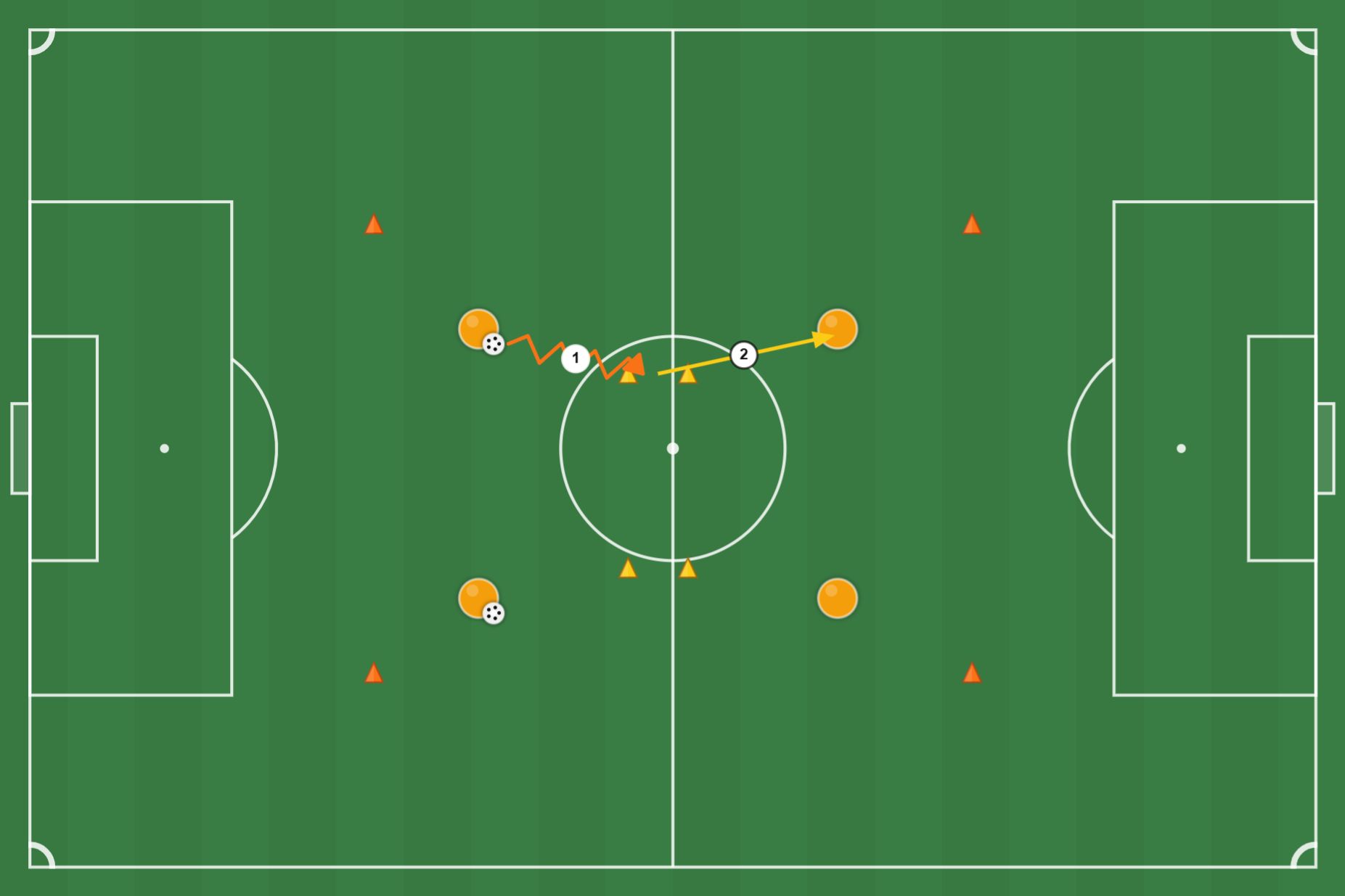
Dribble & Pass Activation
Players work in pairs inside a 20x20m grid, dribbling toward each other and exchanging the ball through cone gates before finding new space. Each pair has one ball and constantly moves, keeping the ball close while scanning for free gates. This activates the body and reintroduces close ball control and head-up dribbling, priming the 1v1 theme of the session. The coach observes whether players keep the ball within playing distance and lift their eyes before passing.
Corner v1
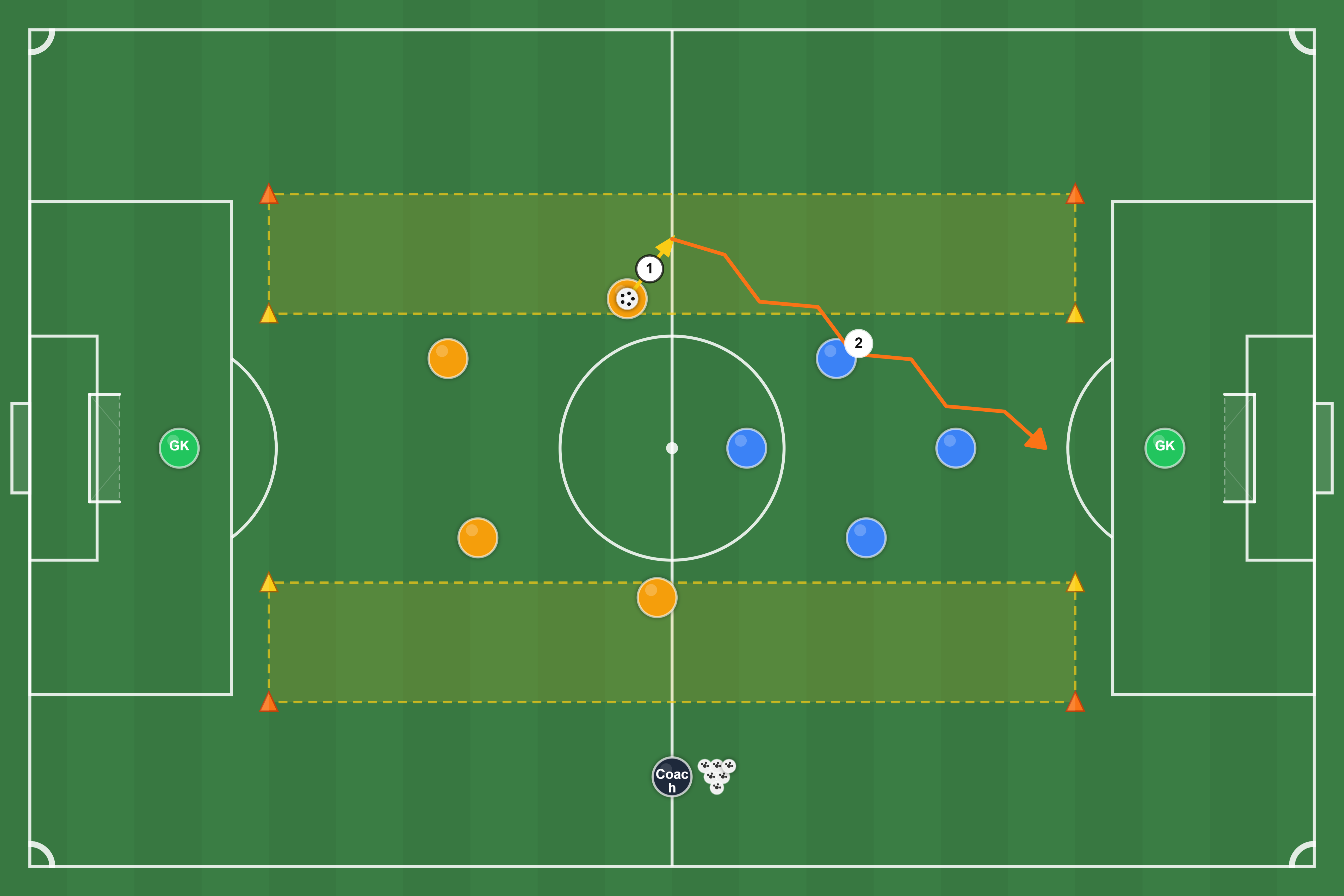
4v4 + GK Conditioned Match
A 4v4 game with goalkeepers on a 45x30m pitch where a goal only counts if the team has played a pass into the wide channel before scoring, forcing players to recognise when to switch play and use width. This final game brings together every decision from the session — scanning, finding the free man, choosing the open route, and switching the point of attack — in a full match context. The width condition rewards intelligent build-up over rushing centrally into traffic. The coach should observe whether players deliberately use the wide channels to unbalance the defence before attacking the goal.
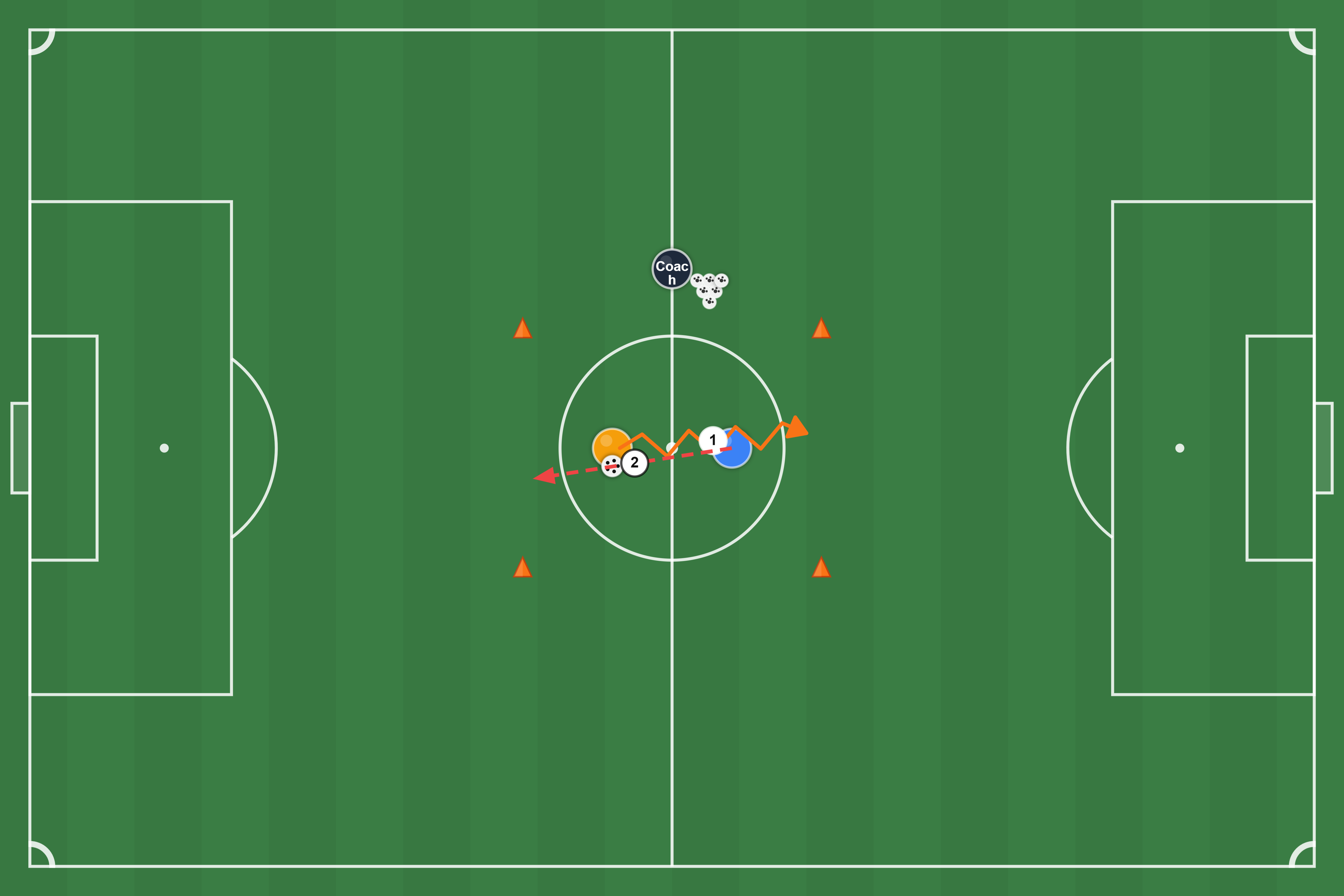
1v1 to End Line Duels
Two players compete in a 12m channel where the attacker scores by dribbling over the defender's end line and the defender scores by winning the ball and dribbling over the attacker's line. Because both can score by attacking, this forces the defender to stay compact and patient rather than diving in, and trains transition the instant possession changes. Players rotate after each duel so everyone gets repeated reps under real pressure with direction. The coach observes whether players recognise the moment the ball turns over and react instantly.
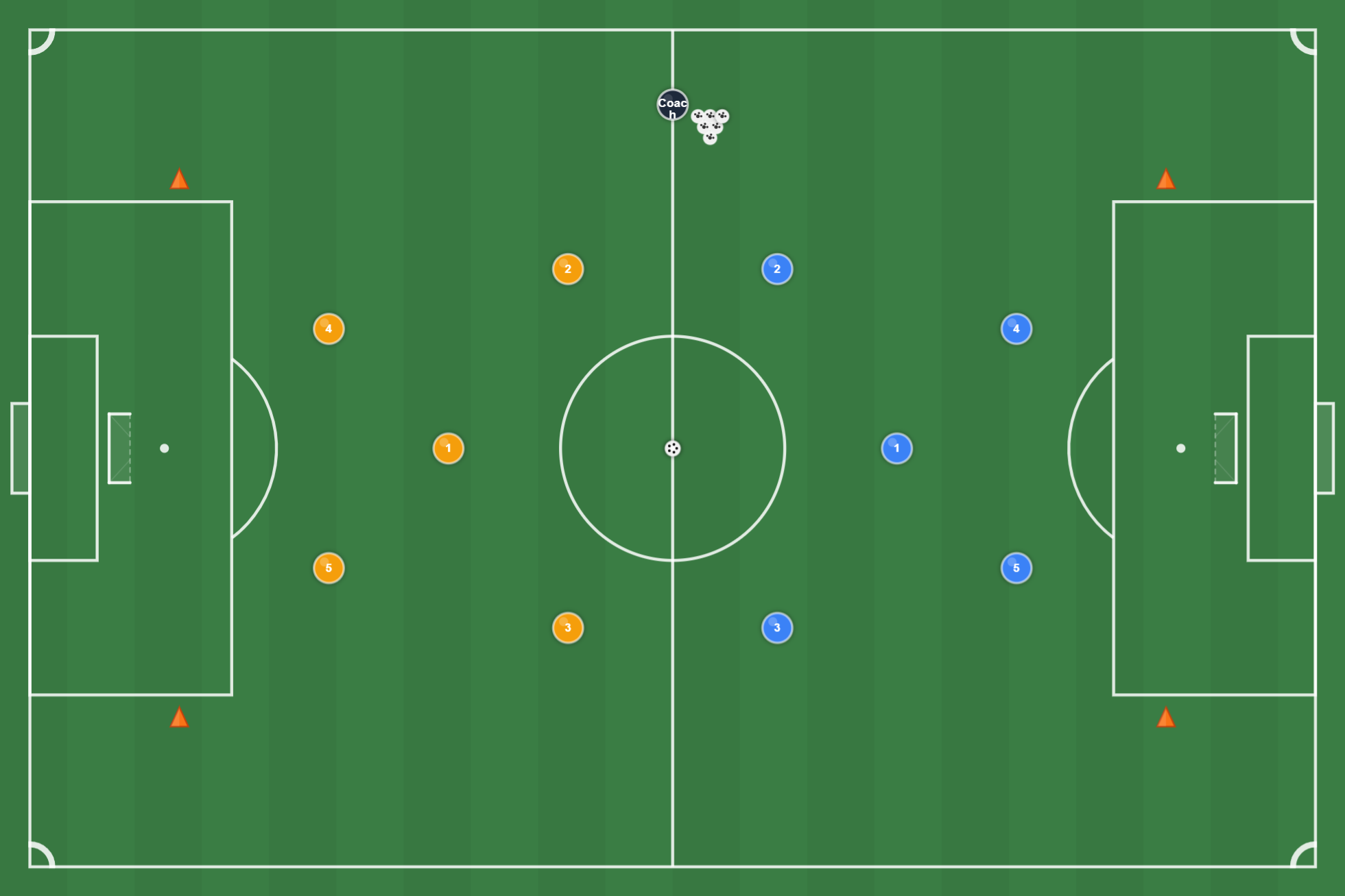
5v5 Conditioned Small-Sided Game
Two teams of five play 5v5 on a 50x35m pitch with small goals, using a rule that rewards the session theme: a goal scored immediately after a player beats an opponent in a 1v1 counts double. This conditioned game lets players apply everything from the session in a free, match-realistic setting while encouraging them to attack 1v1 situations rather than always passing. Goalkeepers are not used; the small goals keep the focus on finishing and beating opponents. The coach observes whether players back themselves to take opponents on in the right areas and counter-press the moment they lose the ball.
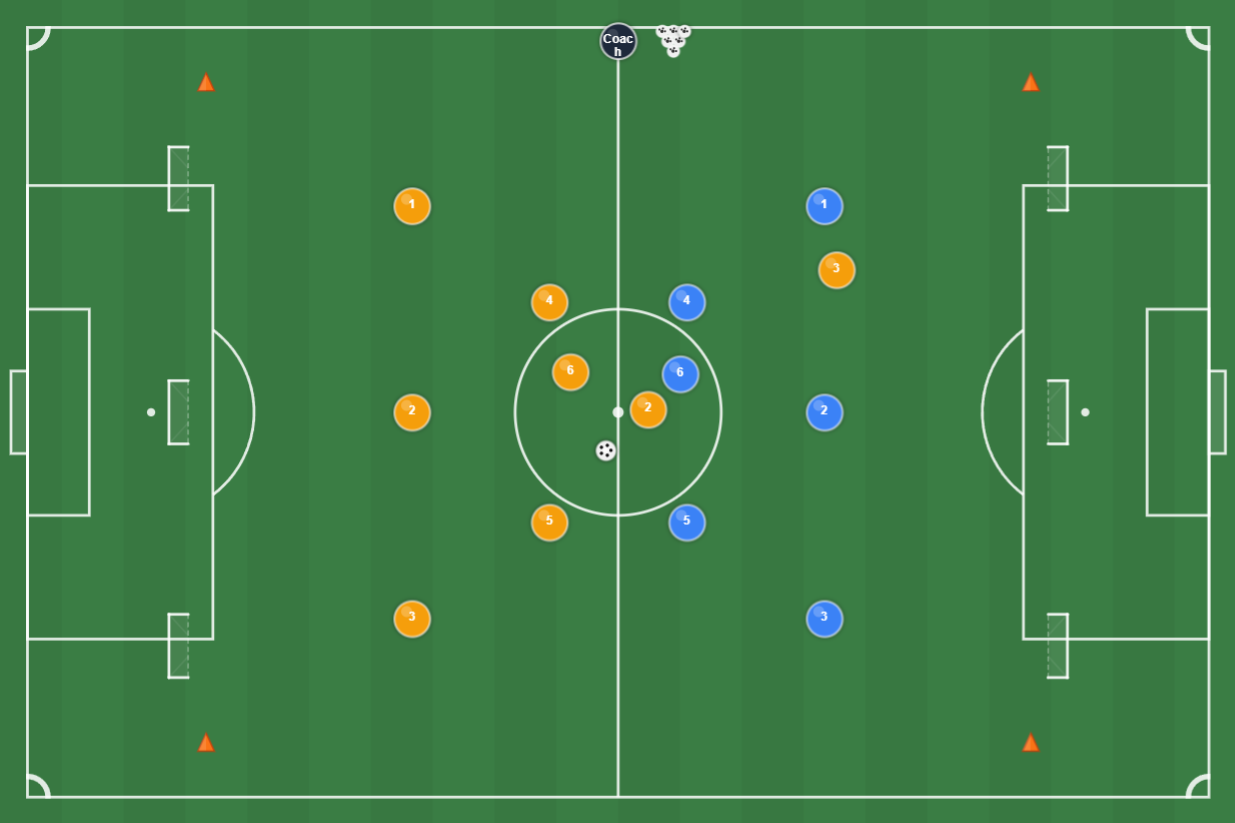
6v6 Three-Goal Width Game
Two teams of six play a small-sided game with three small goals positioned on each end-line, defended by each team. Teams score only when they have switched play to the opposite flank within the same possession before shooting. This forces wide attacking, constant scanning for the least-defended goal, and punishes central over-play. The game is played in a compact area with regular rotations. Watch for teams that fail to switch play before shooting, poor positioning of defenders, and lack of awareness of goal positioning.